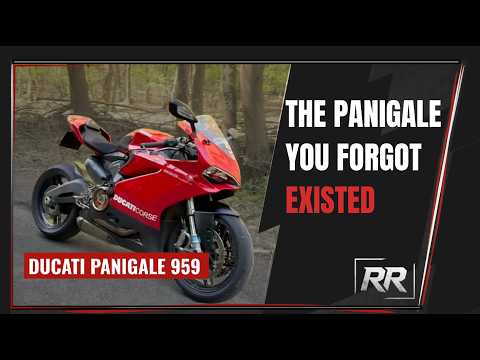
First Panigale designed from scratch as a middleweight
Not a derivative anymore
Every previous Panigale (916, 996, 999, 1098, 1198, 1199, 1299, 959) was either the flagship superbike or a smaller-engined version of one. The 2026 V2 is the first ground-up middleweight design — a clean break that prioritises road usability and lower running costs over track performance.
No more desmodromic valves
After 70 years of Desmo
Ducati invented desmodromic valves in 1956 to cope with valve float at high revs. Every modern Ducati has used them since the 1970s. The new V2 engine uses conventional finger-followers and springs — lighter, simpler, cheaper to service. It's a philosophical shift as much as an engineering one.
17kg lighter than 959
179kg dry · 200kg wet
At 179kg dry, the V2 is the lightest Panigale ever — 17kg lighter than the 959 it replaces, and lighter than every Yamaha R1 since 2009. Borgo Panigale claims this means ~0.2 seconds slower at Vallelunga vs the 955cc 959 despite ~30bhp less peak power.
Service intervals went from yearly to triennial
30,000km valve checks
The old Superquadro needed valve checks every 12,000-18,000 miles (~18,000-29,000km). The new V2 stretches that to 30,000km / 18,600 miles — close to Japanese-style intervals. Cambelt is gone too. Running costs cut roughly in half.
A2 license version now available (for £15k)
47.5bhp restricted mode
A factory A2 (35kW / 47.5bhp) version is sold alongside the full-power one — same bike, just restricted. Means a brand-new Ducati Panigale is now in reach of A2 license holders, even if the price tag isn't.
Panigale V4 is the track tool, V2 is the road tool
Clear product separation
For the first time Ducati has properly separated its two superbike platforms. V4 = WSBK homologation, 218bhp, track-focused. V2 = real-world rider, 120bhp, friendly ergonomics, two-up capable. Both wear the Panigale name but they serve different jobs.